
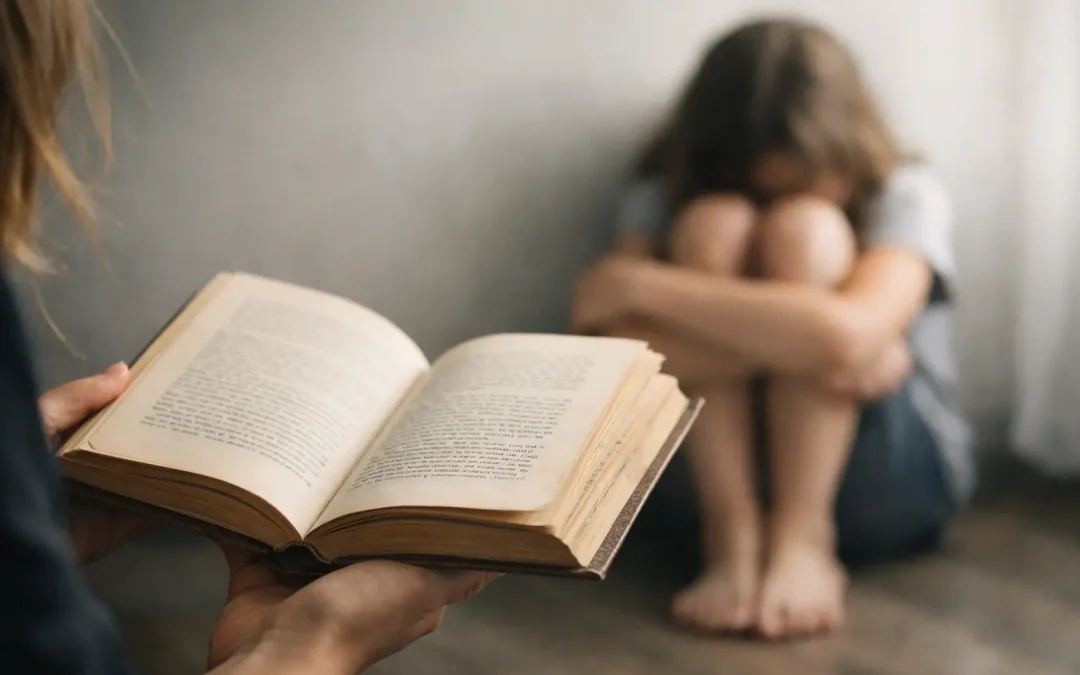
Those searching for the term true story child abuse book are rarely just looking for reading material. What’s usually sought is testimony—something that doesn’t feel invented, doesn’t sugarcoat, and doesn’t drown in palatable drama. Behind this search often lies a harsh desire for truth: What does systematic abuse really look like when told not from a distance, but from inside a destroyed life?
Why a True Story Child Abuse Book Accomplishes Something Different
There are many books about violence against children. But a book about child abuse based on a true story doesn’t automatically mean genuine education. This is precisely where the crucial line runs. Between exploitation and testimony, between calculated sympathy and ruthless disclosure, lies a difference that experienced readers sense immediately.
An authentic factual account doesn’t just want to shock. It exposes structures. It shows how perpetrators build power, how fear is organized, how silence emerges, and why abuse almost never consists of a single monstrous moment. Often it’s a system of threats, dependency, manipulation, and social looking away. Those who read such a book therefore read not just about a crime, but about an environment that made this crime possible.
That’s precisely why autobiographical books in this field are so radical. They refuse comfortable distance. The reader doesn’t remain an observer of someone else’s case. They’re forced into a perspective where shame, confusion, powerlessness, and later often self-destruction aren’t theoretically discussed but experienced.
True Story Child Abuse Book—How to Recognize Authenticity
Not every drastic book is honest. Some texts rely on shock images but evade inner truth. Others hide behind generalizing formulas and ultimately deliver only smooth dramaturgy that sells well but reveals little. Those who seriously want to read a true story child abuse book should therefore look more closely.
Authenticity often shows itself where a text becomes uncomfortable. When it leaves contradictions standing. When memory doesn’t seem neatly polished. When perpetrators don’t appear as caricatures but as people who secure their violence through proximity, authority, or dependency. And when the victim isn’t reduced to the role of eternally passive sufferer but remains visible as a damaged, fighting, contradictory human being.
A credible book can also be recognized by the fact that it doesn’t omit consequences. Child abuse doesn’t end where the assaults stop. The destruction often eats through sexuality, attachment, self-image, addiction, shame, violent relationships, and economic collapse. Those who only describe the abuse but soften the long-term consequences often show only half the truth.
What Readers Really Seek—and What They Must Endure
Many reach for such books because they want to understand what society has suppressed for so long. Some seek language for their own experience. Others seek a truth that no news broadcast and no sterile documentary can deliver. But this is precisely where the burden lies.
A truly unflinching book about child abuse gives the reader no safe distance. It forces them to endure that violence doesn’t always look spectacular. That perpetrators often appear integrated, polite, organized, and untouchable. That children don’t always behave as outsiders morally expect. And that survival leaves ugly traces.
This is hard to read. But that’s exactly why these books are socially relevant. They destroy the lie that abuse is a marginal phenomenon with clearly recognizable perpetrators and unambiguously readable victims. The reality is darker. Much darker.
The Line Between Education and Voyeurism
The subject attracts attention. That’s unavoidable. It becomes problematic where attention becomes more important than truth. A book can be brutally honest—or it can display misery to convert shock into sales. This line isn’t always immediately visible, but it’s real.
Education directs the gaze not only at the horror but at its mechanics. Voyeurism gets stuck on the worst scenes. Education asks how perpetrators were protected, why no one intervened, how the victim internally shattered, and which social systems failed. Voyeurism consumes pain as stimulus.
For readers, this means: The harshness of a book isn’t the measure, but its stance. Does the disclosure serve truth—or does it only serve shock? An uncompromising book may hurt. It must even hurt if it doesn’t want to betray reality. But it should never give the impression that suffering only functions as sensation.
Why Autobiographical Testimonies Hit So Deep
A novel can portray abuse in a literarily compelling way. But an autobiographical testimony carries a different force. It doesn’t speak from researched proximity but from lived destruction. This perspective changes everything.
Suddenly it’s no longer about a well-composed story but about a life shaped by violence. The language is often rawer, messier, more direct. That’s precisely what makes it credible. Real memory rarely comes polished. It’s torn, circling, sometimes frighteningly sober and then again full of abysses.
Those who seek books like ImAbgrund.com are therefore often looking for more than literature. What’s sought is a document against silence. A text that doesn’t ask whether it’s pleasant but whether it’s true. And truth in this field is rarely elegant. Usually it’s disturbing, shameful, and political because it reveals how many looked away.
A Good Book About Child Abuse Always Also Explains Power
The actual core of such books isn’t just the crime itself but the logic of power behind it. Child abuse isn’t merely sexual violence. It’s total boundary violation under conditions of maximum inferiority. A child has no equivalent language, no real freedom of action, often no credible public. That’s exactly what perpetrators exploit.
That’s why the strongest books are those that don’t treat power abstractly. They show how it functions in glances, threats, gifts, silence commands, isolation, and dependency. They also show how perpetrators reshape the victim’s reality until the child no longer knows for certain what’s normal, permitted, or unspeakable.
When a book exposes these mechanisms, it accomplishes more than sympathy. It becomes evidence against the comfortable illusion that abuse only begins where outsiders clearly recognize it as violence. In truth, it often begins much earlier—in control, manipulation, and systematic confusion.
For Whom Such a Book Is Right—and for Whom It Isn’t
Not everyone should read such a stressful book unprepared. That’s not weakness but self-protection. Those who carry traumatic experiences themselves may encounter content in autobiographical accounts that brutally tear open old wounds. Readers primarily seeking entertainment will also hardly find what they expect here.
But for people who want to understand taboos not just by naming them but in their full harshness, a truthful book about child abuse can be indispensable. It shows what lies behind the headlines. It removes silence’s protective space. And it gives language to an experience often designed precisely to render speechless.
This doesn’t mean every unflinching book is automatically good. It only means: When a text honestly hits this subject, it doesn’t remain without consequences. It changes the view of perpetrators, of institutions, of families, of sexuality, of shame—and sometimes also of oneself.
Why These Books Remain Socially Necessary
There are subjects many prefer to keep abstract. Child abuse is among them. As long as it’s only discussed in statistics, court files, or morally safe formulas, part of the truth remains invisible. Books with an autobiographical core tear away this protective layer.
They make clear that abuse isn’t a dark exception outside society. It happens within it, through its gaps, its looking away, its cowardice. It lives where victims aren’t believed, perpetrators are protected, and consequences are individualized. That’s why such a book isn’t merely personal processing. It’s an indictment.
So those searching for a true story child abuse book shouldn’t first ask whether it’s harsh. Many are harsh. The crucial question is: Is it truthful enough to break the silence without betraying reality? If a book achieves that, then it’s more than literature—then it’s a blow against the facade behind which too much has been hidden for too long.
And that’s exactly where the real value of such texts begins: not in shock, but in the refusal to keep looking away.