
![[HERO] The Invisible Chain: How Coercion and Dependence Work in Secret](https://cdn.marblism.com/hJiCl-uERVr.webp)
Trigger warning: This article discusses topics such as abuse, psychological violence, and compulsive dependency. If you are affected, please read with caution or contact a counseling center.
The question always comes. It is asked by people who cannot understand it. By people who have never been in this situation. By people who think they would have acted differently.
“Why didn’t you just leave?”
This question is a knife. It cuts deep because it contains an assumption: That there was a door. That this door was open. That all you had to do was walk through it.
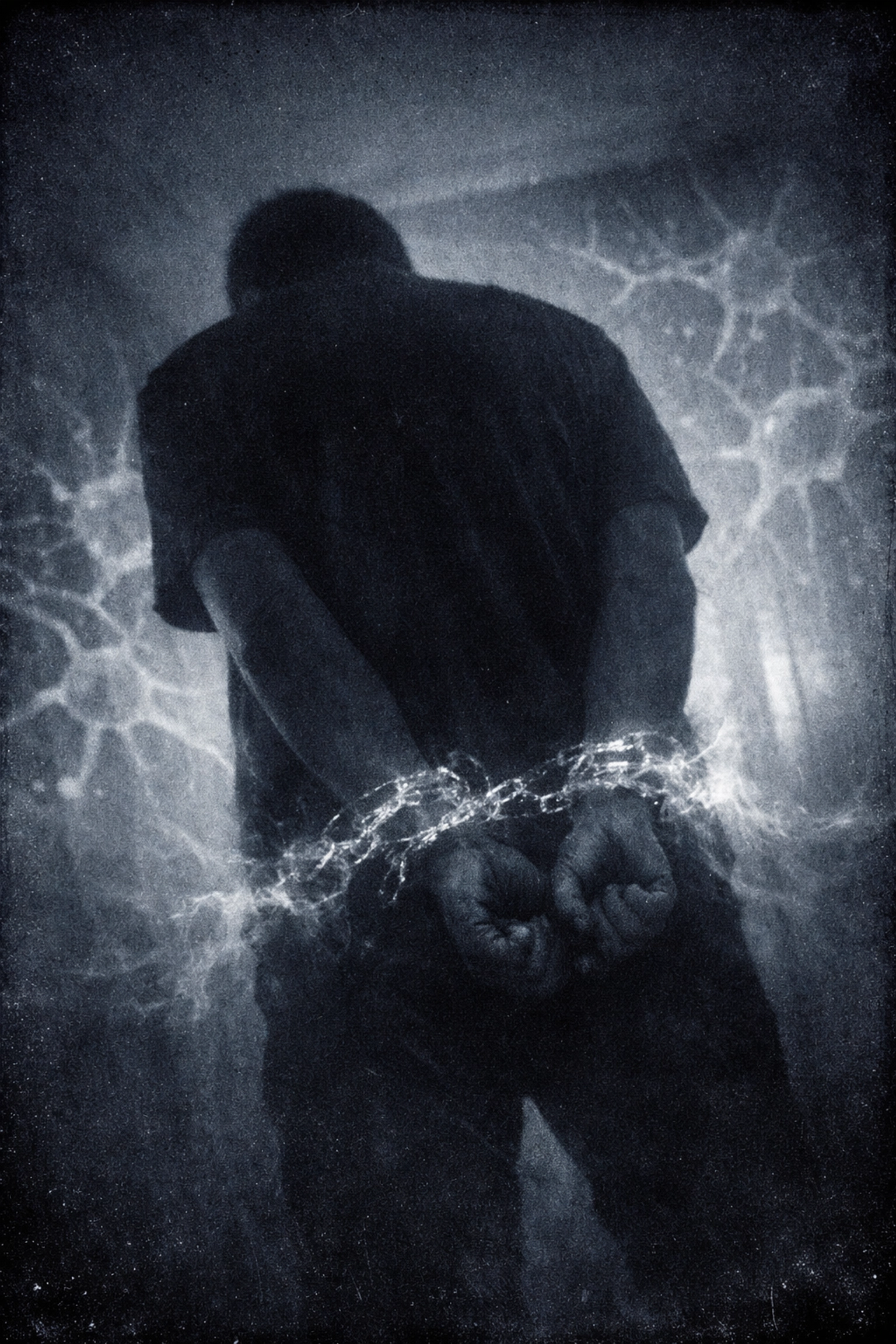
But what if the chains are not made of iron? What if they are invisible – woven from fear, shame, manipulation, and the systematic destruction of one’s own self?
The Anatomy of the Invisible Chain
Coercion rarely works the way we imagine it. There is not always the dark cellar, the locked door, the physical restraints. The most effective chains are the ones that no one sees – not even the victim themselves.
Psychological coercion operates on a level that remains invisible to outsiders. It starts insidiously. A compliment here. A threat there. An interplay of affection and punishment that confuses and eventually rewires the brain.
The perpetrators are not monsters with recognizable horns. They are masters of manipulation. They know exactly which buttons to push. They isolate their victims from friends and family. They undermine self-esteem. They create a reality in which the victim believes they cannot survive without the perpetrator.
The Stockholm Syndrome of Everyday Life
What became known as Stockholm Syndrome in extreme kidnapping cases exists in a milder form in countless abusive relationships. It is a survival mechanism of the brain.
When a person is exposed to a situation from which there seems to be no escape, the brain begins to adapt. It rationalizes. It finds reasons why the perpetrator is “actually not so bad.” It clings to the few moments of kindness like a lifeline.
This psychological bond is not a weakness. It is a survival strategy. The mind protects itself from complete collapse by distorting reality.
The result: The victim sometimes even defends the perpetrator. They believe they are to blame. They are ashamed. And it is precisely this shame that is the strongest bolt on the invisible door.
Dependence as a Weapon
Perpetrators create dependencies – consciously and systematically. These dependencies can take various forms:
Financial dependence: The victim has no access to money, no own account, no way to support themselves.
Social dependence: The perpetrator has become the only contact with the outside world. Friends and family have been systematically alienated over months or years.
Emotional dependence: The constant alternation between affection and rejection creates an addiction-like bond. The victim chases after the few good moments like an addict after the next kick.
Existential dependence: In extreme cases, the perpetrator literally controls life and death. The threat does not even have to be spoken – it hovers permanently in the room.

The Story Behind “In the Abyss”
The book “In the Abyss – The True Story of Pussyboy” tells of exactly these invisible chains. It is not fiction. It is lived reality.
The autobiographical narrative shows how a young person gets into a system of dependence and coercion. How the boundaries between victim and survivor blur. How society looks away – or, worse, asks the wrong questions.
The book is uncomfortable. It forces the reader to look where we normally look away. It confronts us with the reality that such stories do not happen in distant lands or dark alleys – but in the midst of us.
Anyone who wants to learn more about this story can find the book and a reading sample on the website.
Why Silence Protects the Perpetrators
In Germany, topics such as sexual abuse, forced prostitution, and psychological violence are still shrouded in a thick cloak of silence. We don’t like to talk about it. It makes us uncomfortable. It disturbs our image of a functioning society.
But this silence has a price: It isolates the victims even further. It makes them feel alone. It reinforces the shame they already feel.
Studies show that most abuse survivors need years or even decades before they can talk about their experiences. Many never do. The reasons are varied: Fear of disbelief. Fear of stigmatization. Fear of being blamed.
The Question We Should Ask Ourselves
Instead of asking “Why didn’t you leave?”, we should ask other questions:
- Why was it possible for the perpetrator to create this situation?
- What social structures enable such abuse?
- How can we listen to those affected without judging?
- What can we do to make the invisible chains visible?
These questions are more uncomfortable. They require us to take responsibility. They force us to look beyond the confines of our own experience.
But that is exactly what is necessary. Because as long as we ask the victims why they didn’t leave, instead of asking the perpetrators why they did it, nothing will change.
The Long-Term Consequences: When the Chains Remain
Even if a victim manages to free themselves from an abusive situation, the traces remain. The invisible chains do not simply dissolve. They transform.
Post-traumatic stress disorder (PTSD) is a common consequence. Flashbacks, nightmares, panic attacks – the body remembers, even if the mind wants to forget.
Dissociative disorders can occur when the brain has learned to detach from reality during the trauma. This detachment often persists long after the danger has passed.
Relationship problems are almost inevitable. How can someone whose trust has been so fundamentally destroyed learn to trust again? How can someone who has learned that love and pain belong together have a healthy relationship?
Healing from such traumas is possible – but it is a long, difficult road. And it begins with us as a society stopping asking the wrong questions.
A Channel for the Truth
The YouTube video “Sex Slave & Coercion” on the channel Verschlossene Türen goes deeper into this topic. It shows what happens when coercion becomes the norm. When the chains are worn for so long that you no longer feel them.
The channel exists because the silence must end. Because those affected should know that they are not alone. Because society must look, even if it hurts.
It’s not sensational content. It’s not entertainment. It is reality – raw, unvarnished, necessary.
Looking Where Others Look Away
The invisible chain is real. It binds millions of people worldwide in situations from which they seemingly cannot escape. It works in secret because we as a society do not look closely enough.
It is time to change that.
Not through voyeuristic interest. Not through superficial pity. But through genuine understanding. Through the willingness to listen. Through the decision to endure uncomfortable truths.
The doors behind which such stories happen are locked. But they can be opened – if we stop looking away.
Subscribe to the “Verschlossene Türen” channel on YouTube to learn more: https://www.youtube.com/@VerschlosseneTürenDGA