
![[HERO] Final Stop Zoo Station: The Forgotten Male Prostitution Scene of the 70s](https://cdn.marblism.com/0afu8U7yg7e.webp)
When people think of Zoo Station in the 70s, they usually picture Christiane F. A bit of heroin chic, a bit of tragic teenage rebellion, filmed with a David Bowie soundtrack. But the reality in the shadow of the Berlin Wall was no arthouse cinema. While the world stared at the “Children of Zoo Station,” there was a group that disappeared into society’s blind spot: the male prostitutes. The street hustlers.
In the 70s, West Berlin was an island of the broken. Those who ended up here were often on the run – from conscription, from the confines of the provinces, or from the hell of state-run correctional facilities. What they found was no safe space, but a brutal market where flesh was exchanged for drugs. It was a world full of violence, coldness, and a double standard that is still sickening today.
Paragraph 175: The License to Exploit
One cannot understand the male prostitution scene of the 70s without talking about the law that made these boys fair game. The notorious Paragraph 175. Although it was reformed in 1969, sex between men remained punishable for young men under 21 (later 18).
In practice, this meant: if a young man sold himself on the street, he was legally a criminal. If a client became violent, didn’t pay, or abused a boy, the victim couldn’t go to the police. Anyone who did would expose themselves. This law was the perfect breeding ground for blackmail and systematic abuse. The boys were defenseless because the state saw them not as victims, but as perpetrators.
It is precisely this kind of institutional blindness that we repeatedly address at Im Abgrund. When the law criminalizes the weakest, it puts weapons in the hands of predators.
From the Home to the Streets: The Failure of Welfare
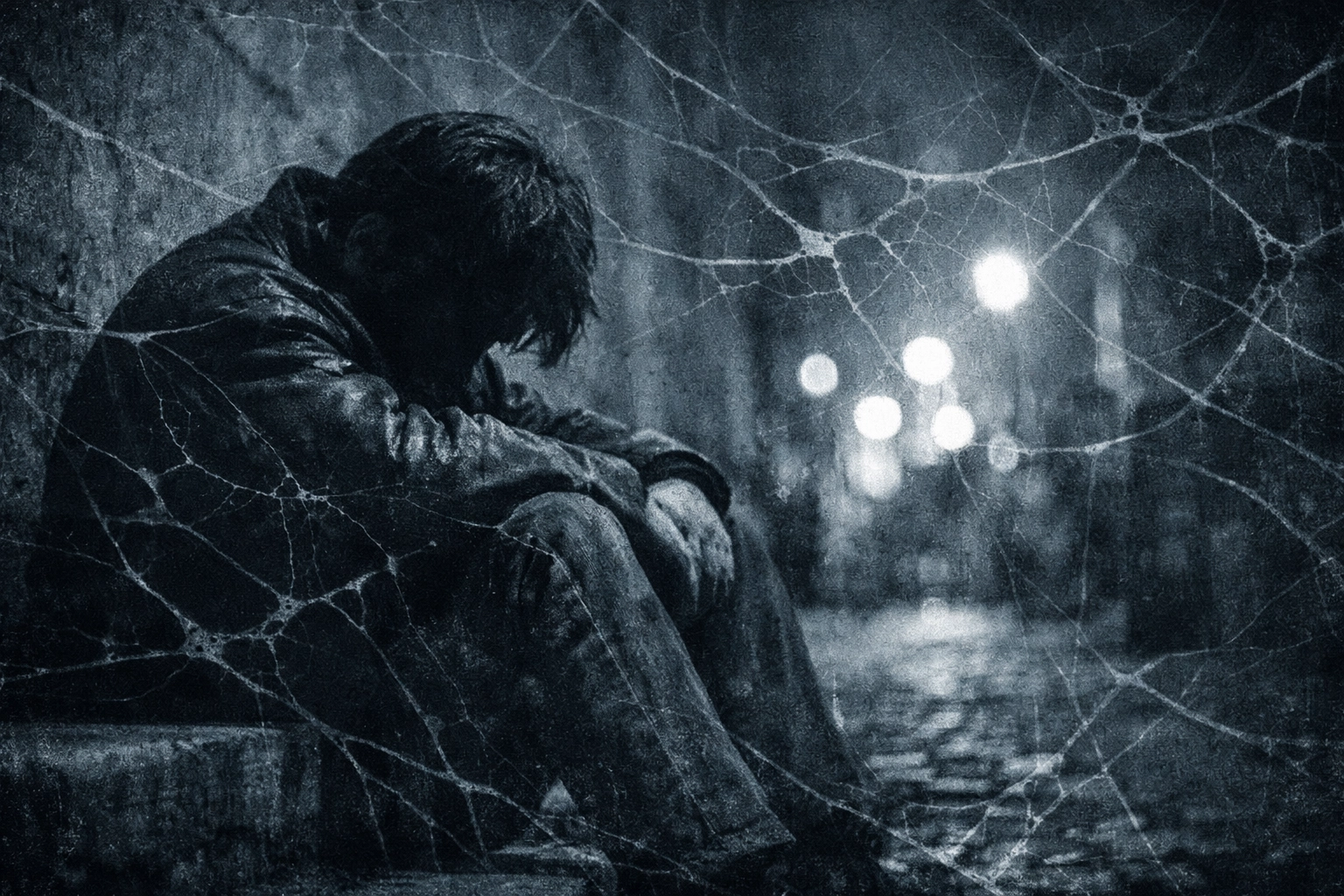
Most of the boys who stood at Zoo Station or in the relevant pubs around Nollendorfplatz in the 70s did not come from sheltered homes. They were wards of the state. Many of them fled state or church-run homes where beatings, humiliation, and sexual abuse were often part of daily life.
Those who broke out of the “welfare education” system had nothing. No papers, no money, no future. Zoo Station was not a transit station for them, but the final stop. Here they met a “surrogate family” of other stranded individuals, dealers, and pimps. The state, which was supposed to protect them, had already broken them in the homes. The streets were just the logical continuation of a chain of violence.
This continuity of failure is a central theme in the work of Daniel G. Anders. In his book, he shows how children fall through the cracks and how society looks away while the most vulnerable are ground down by the system. The boys of the 1970s were the invisible victims of a system that placed order above humanity.
Heroin, Cold, and the Smell of Urine
Forget the soft-focus images. The reality at the Zoo was dirty. It smelled of urine, unwashed bodies, and cheap booze. In the 70s, the first major wave of heroin swept over West Berlin. “Schore” (slang for heroin) became both currency and a curse.
Many of the hustlers started shooting up to numb the cold and disgust. Those who sold their bodies in the station toilets or in the dark corners of the Tiergarten had to switch off their minds. The clients? They were often the “respectable” citizens. Husbands, fathers, businessmen who indulged their dark urges after work and then returned to their clean suburban homes.
This double standard is the most repulsive aspect of the entire scene. The clients didn’t just buy sex; they bought power. They knew these boys had no one. They knew they were “scum” in the eyes of the public. This power dynamic is the core of all abuse. It’s never just about sex. It’s always about possessing someone who cannot defend themselves.

No Romance, Only the Abyss
There’s a reason why we at Im Abgrund tell these stories. Not to shock, but to pull the truth out of the dirt. The male prostitution scene of the 70s is often treated as a mere footnote in Berlin’s urban history or perceived distortedly through the lens of Christiane F. But for the thousands of young men who lost their souls there, it was no adventure. It was a struggle for survival.
Many of these men are dead today – died of an overdose, AIDS, or the long-term consequences of violence. Those who survived still bear the scars. These are the same scars that Daniel G. Anders describes in his works. It is the burden of silence, the shame that perpetrators and a society that looked away should actually bear.
In articles like Trauma Processing Through Autobiographies, we highlight why it is so important to finally speak these stories. Silence is the armor of the perpetrators. When we talk about the hustlers of Zoo Station, we break through that armor.
Why We Must Remember Today
One might say: “That was 50 years ago, why are you digging it up?” The answer is simple: because the mechanisms haven’t changed. Even today, people are exploited because they are legally or socially marginalized. Even today, there are institutions that look away when power is abused.
The history of the male prostitution scene in the 70s is a warning. It shows us what happens when morality is placed above human rights and when a law (Paragraph 175) becomes a weapon against victims. If you want to learn more about these invisible chains, you should explore the concept of the invisible chain – how coercion and dependence operate in secret.

Conclusion: The End of Silence
The boys from Zoo Station were not “hustlers” – they were children and young men abandoned by a system. They were the harbingers of a society that preferred to hide its abysses behind neon lights and disco fog rather than face the ugly truth.
At Im Abgrund, we will continue to look precisely where others look away. Whether it’s ancient exploitation in Nero’s Rome or the grime of 70s Berlin. It’s the same story. It’s the same pain.
If you want to learn more about the unvarnished reality of abuse and the fight against silence, then follow us. We will no longer let the victims be invisible.
What do you think? Were you aware of how much the law back then left these boys defenseless? Write to us in the comments or engage directly with the topics.
Visit our YouTube channel for deeper insights into these dark chapters of our history:
https://www.youtube.com/@VerschlosseneTürenDGA