
![[HERO] Colors against the abyss: Why Pride flags are not decoration, but declarations of war](https://cdn.marblism.com/w-AU1fh79gf.webp)
Visibility saves lives. Period.
Anyone who has to exist in secret, who hides, who has to deny their identity to survive – knows what invisibility means. It eats you up from the inside. That’s why Pride flags aren’t cute rainbow decorations for Instagram stories. They are declarations of war. Signs that people exist who no longer want to hide. Who want to be seen. Who want to survive.
In a world where queer people are still discriminated against, attacked, and murdered, every hoisted flag is an act of resistance. A middle finger to those who want you to disappear. A beacon for those who feel alone.
From Nazi symbols to signs of hope
The history of Pride flags does not begin with bright colors and cheerful parades. It begins with pink triangles. With labels that homosexuals had to wear in concentration camps. With systematic persecution, torture, and death.
Decades later, in 1978 in San Francisco, Harvey Milk – one of the first openly gay politicians in the USA – had an idea. The queer community needed a new symbol. One that didn’t come from Nazis. One that meant hope instead of persecution.
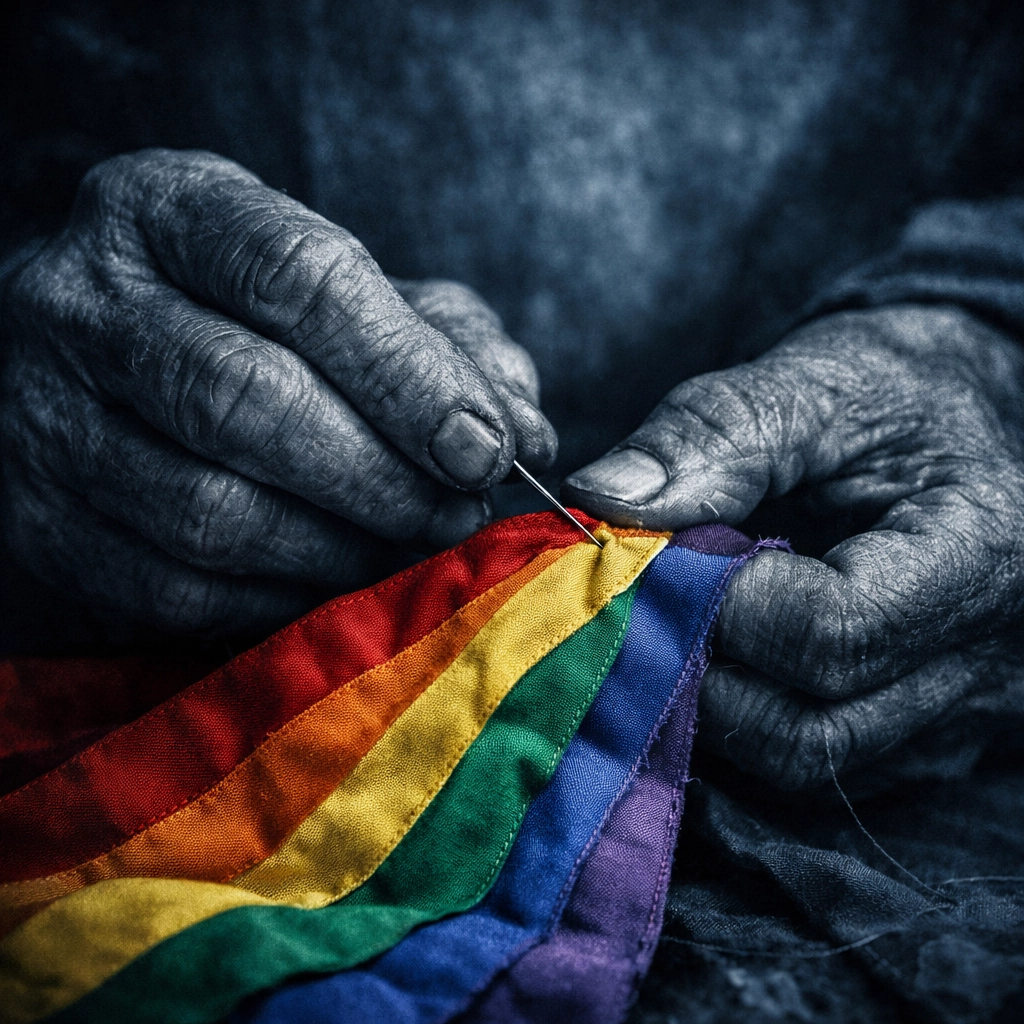
He commissioned Gilbert Baker, an artist and activist. Baker wanted to create something from nature. Something that shows: Queer love is natural. He designed the first rainbow flag. Hand-sewn. Eight colors. Each with meaning.
That wasn’t a design project. That was a political act.
The rainbow flag: More than colorful stripes
Baker’s original had eight stripes. Each color stood for something:
- Pink: Sexuality
- Red: Life
- Orange: Healing
- Yellow: Sunlight
- Green: Nature
- Turquoise: Magic and art
- Indigo: Harmony
- Violet: Spirit
Then Harvey Milk was murdered. November 1978. The demand for the flag exploded. But pink fabric was expensive and difficult to produce at the time. The pink stripe was dropped. Later also turquoise – for practical reasons at parades.
This is how the six-colored rainbow flag that everyone knows today came about.
But the flag continues to evolve. Because the community is growing. Because new struggles are being added.
2017: The Philadelphia Pride Flag adds black and brown stripes. Visibility for People of Color within the queer community.
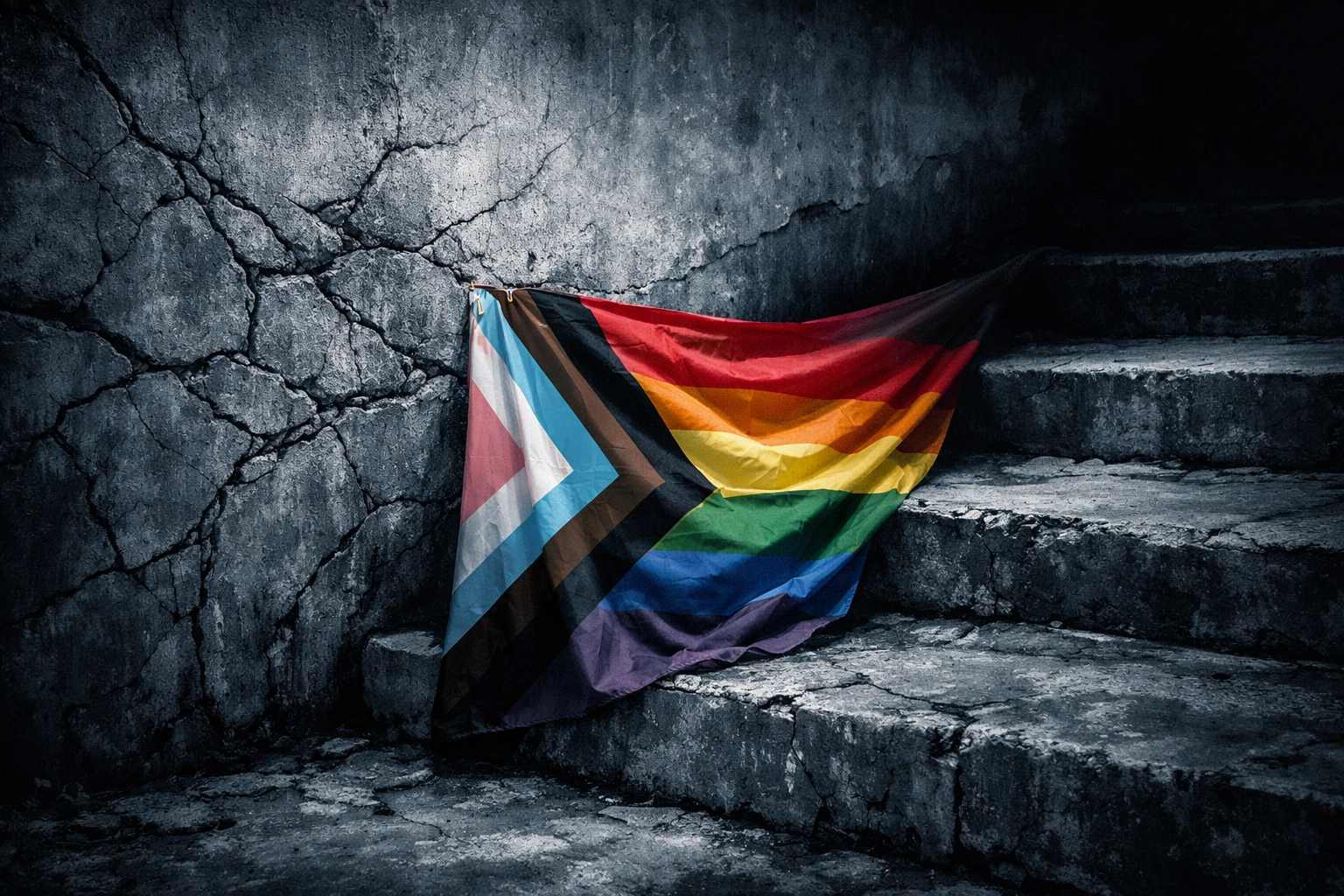
2018: Daniel Quasar designs the Progress Pride Flag. It integrates the colors of the Trans flag (Light Blue, Pink, White) and the PoC stripes in a wedge. The wedge points forward. Symbolism: There is still much to do.
The black stripe also stands for those who have died of AIDS. For the forgotten struggles. For those who are no longer there.
Every identity needs visibility
The rainbow flag is the roof. But countless specific flags exist underneath. Why? Because visibility saves lives.
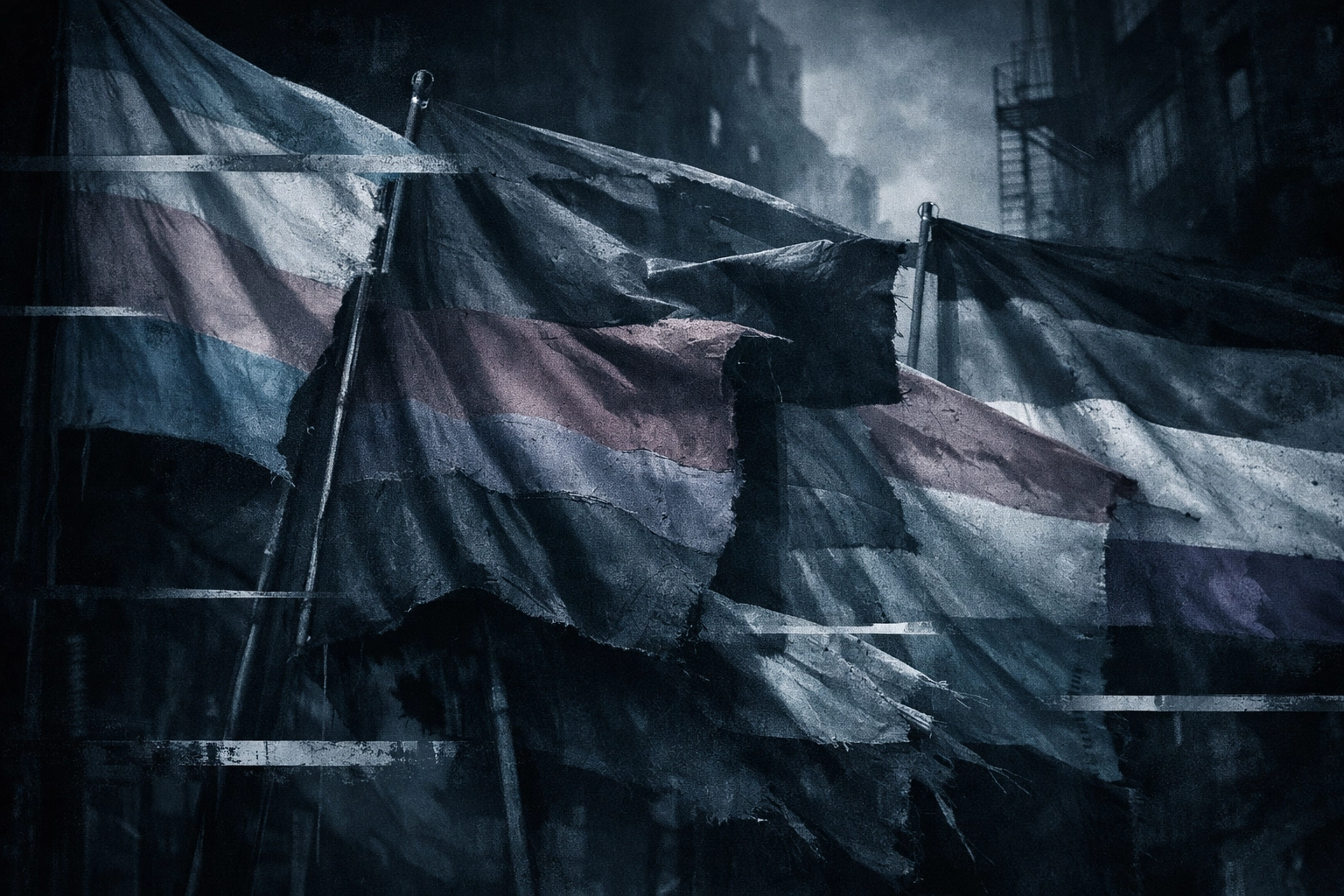
Transgender flag
- Monica Helms. Five stripes: Light Blue, Pink, White, Pink, Light Blue.
Light blue and pink – the traditional colors for “boys” and “girls”. The white stripe in the middle: For all who are in transition, are intersex, or do not identify as non-binary.
Trans people are particularly at risk. Violence, discrimination, suicide. This flag is not a fashion statement. It is a sign of survival.
Bisexual flag
- Michael Page. Conscious strategy against invisibility.
Pink: Attraction to the same sex. Blue: Attraction to the opposite sex. Purple: Attraction to both.
Bi people are often marginalized from both sides. “Not gay enough. Not straight enough.” This flag says: We exist.
More flags in the fight for visibility
Pansexual (Pink, Yellow, Blue): Attraction regardless of gender. Pink for women, blue for men, yellow for everyone else.
Asexual (Black, Gray, White, Purple): Black for asexuality. Gray for the gray area. White for allies. Purple for community.
Lesbian (Orange and pink tones): The “Sunset Lesbian Flag” represents the unique relationship to femininity, community, independence.
Non-binary (Yellow, White, Purple, Black): Yellow for gender outside the norm. White for all genders. Purple for mixture. Black for no gender.
Intersex (Yellow with purple circle): Deliberately without gender-specific colors. The circle symbolizes wholeness. The right to be who you are.
Why flags are not decoration
Imagine growing up and never seeing anyone like you. Anywhere. You think you’re wrong. Broken. Alone.
Then you see a flag. On a building. At a parade. As a pin on a jacket.
Suddenly you know: You are not alone.
That is the power of these symbols. They create safe spaces in an unsafe world. They signal: You are welcome here. Here you can be yourself.
For young queer people who feel isolated, seeing a Pride flag can be life-saving. Literally.
But the flags are also political. When companies, schools, or government buildings hoist them, that’s a statement. It says: We see you. We stand by your side .
In countries where queer people are persecuted, where homosexuality is punishable by death, Pride flags are symbols of resistance. They are carried at protests. Often at the risk of life.
This is not a trend. This is survival.
Pride is not a luxury
Some ask: “Why do you need Pride? Why a parade?”
Because pride is not a matter of course when the world tells you to be ashamed.
Because it is an act of self-empowerment to say: “I exist. I am proud. I’m not hiding.”
Because every hoisted flag is a sign for the next generation: It gets better.
The history of Pride flags is the history of people stepping out of the shadows. Who climb out of the abyss. Who refuse to remain invisible.
From Gilbert Baker’s hand-sewn rainbow flag to the countless specific identity flags today – every symbol tells of struggle, healing, and community.
The message is clear
Pride flags are not decoration. They are declarations of war.
They say: We are here. We have always been here. We will not disappear.
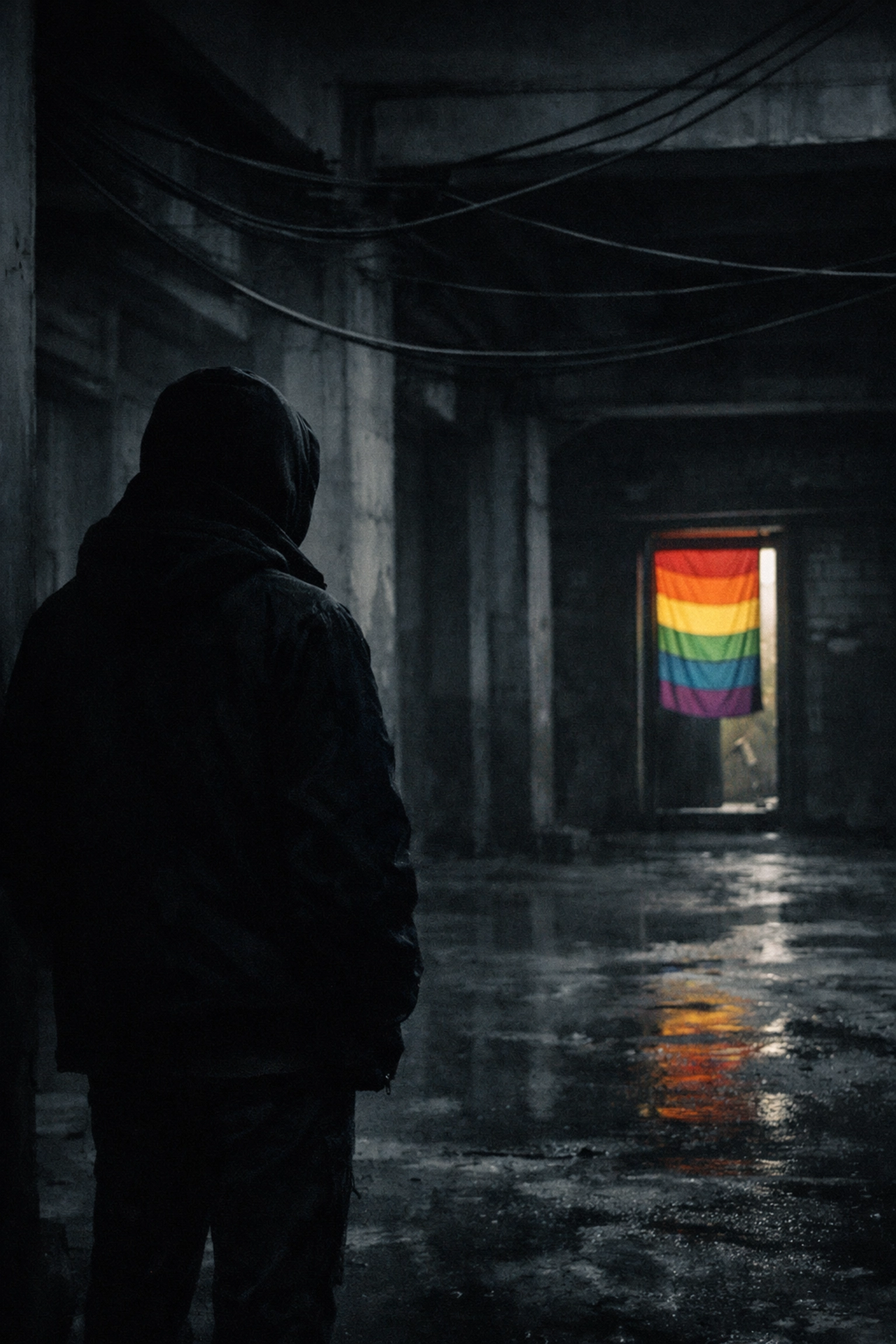
They are beacons for those who stand in the dark. Signs of hope for those who think they are alone.
And they are reminders: The fight is not over. The Progress Pride Flag shows it with its wedge – it points forward. Because there is still so much to do.
In a world full of abysses, these flags are colors of resistance. Of survival. Of the right to exist.
Every single color. Every single flag. Every single person who wears them.
That’s not decoration. That is life.
You can find more about stories from the abyss on our YouTube channel @VerschlosseneTürenDGA, where we talk about topics that others prefer to keep silent.